

Canadian rental tax and records · Part 4 of 5
Renting your basement: allocate expenses without deducting your whole home
Allocate Canadian basement-rental expenses between direct, shared and personal use, with a worked example and separate change-of-use and CCA considerations.
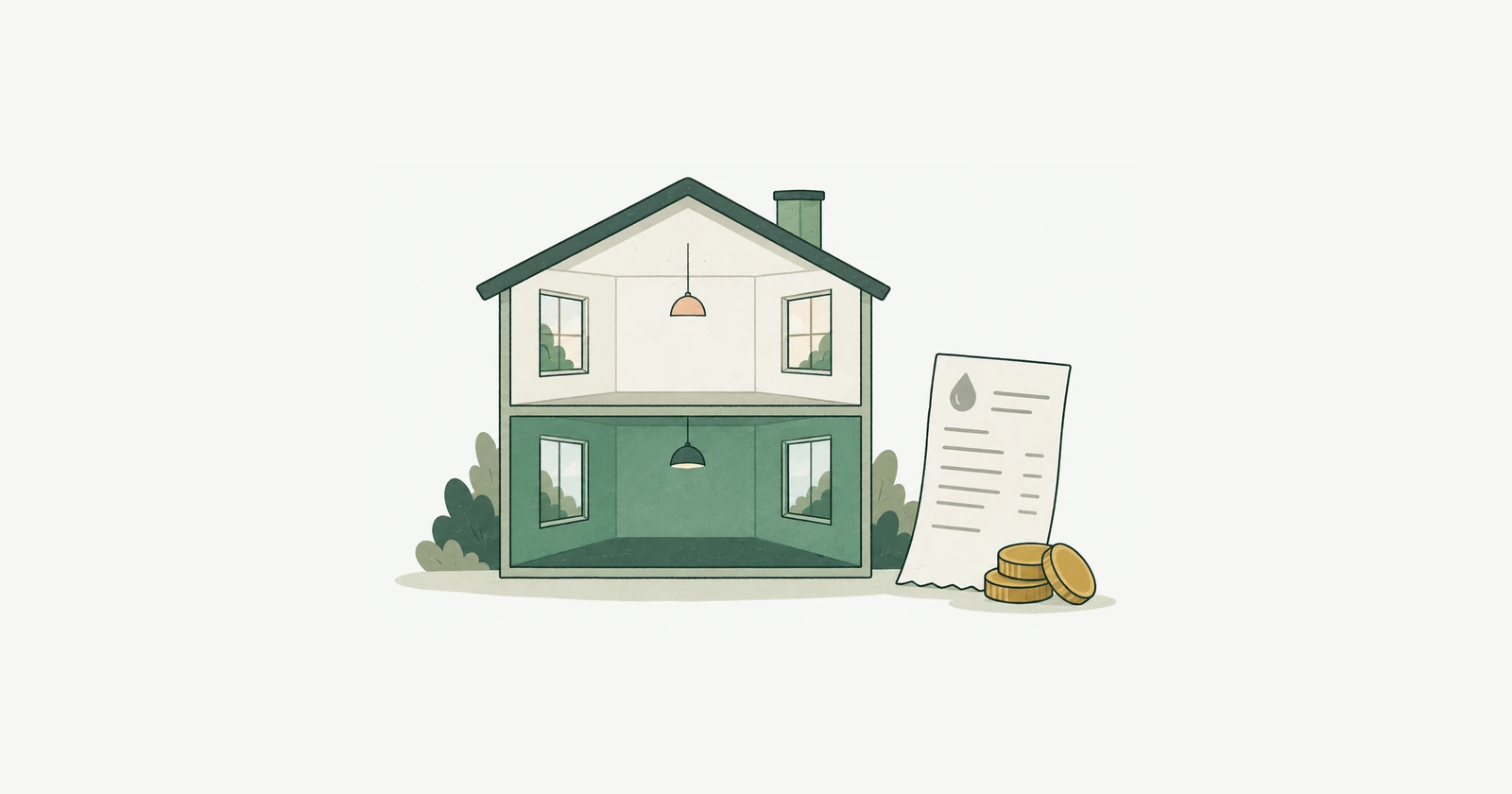
When a tenant rents your basement, some bills belong entirely to the rental, some belong entirely to your home life, and others serve both. A defensible deduction begins with that split.
The goal is to connect each expense to the space and use it supports. “The tenant lives downstairs” does not make the upstairs repainting or the full hydro bill a rental expense.
This is a 2025 Ontario example for a sole owner with a profit-seeking, long-term residential rental. It explains federal income-tax allocation, not zoning permission, a building-code approval or a complete personal tax return.
Separate direct costs from shared bills
A small repair confined to the rented suite can be a direct rental expense if correctly classified as current. A repair confined to your personal bedroom is personal. Property tax and whole-home insurance require an allocation because they cover the entire house.
CRA permits a division of whole-property costs using measures such as area or room count. Expenses must relate to rental use; report total expenses and the personal portion in the applicable T776 columns. See CRA’s partial-property expense guidance.
Choose a basis you can explain. A measured floor plan, separate utility meter or invoice naming a particular unit can be better evidence than a round percentage recalled at tax time. Different expenses may need different supported bases. A separate meter can show actual utility use even when property tax is reasonably divided by area.
Work through an exclusive-space example
Assume the tenant exclusively rents 600 square feet of a 2,000-square-foot home for all of 2025. There are no shared interior rooms. For this example, 30% is a reasonable, documented allocation for the listed whole-home costs.
The rental share is rented area divided by total area:
is the rental share, the exclusive rented area and the total area on the same measurement basis.
| Current cost | Whole bill | Rental deduction |
|---|---|---|
| Property tax | CAD 6,000 | CAD 1,800 |
| Insurance for the year | CAD 2,000 | CAD 600 |
| Utilities paid by owner | CAD 4,000 | CAD 1,200 |
| Routine whole-home repair | CAD 1,000 | CAD 300 |
| Minor repair only in rental suite | CAD 900 | CAD 900 |
| Advertising only for tenant | CAD 200 | CAD 200 |
| Personal upstairs repair | CAD 700 | CAD 0 |
Shared costs total CAD 13,000; their rental portion is CAD 3,900. Add CAD 1,100 of direct rental costs for CAD 5,000 in current deductions. With CAD 18,000 rent and no interest, other costs or CCA, net rental income is CAD 13,000.
The total money spent on all these household bills is CAD 14,800. Its CAD 9,800 personal portion remains outside the rental deduction. A percentage rule applied to every invoice would incorrectly reduce the direct suite repair and incorrectly include part of the personal repair.
These classifications are stipulated for the calculation. A project that creates or improves the suite may be capital rather than a current repair. Keep those invoices in the capital file and use CRA’s classification tests. The word “basement” does not settle their treatment.
Shared rooms and personal-use months need more detail
If the tenant also uses your kitchen or laundry room, distinguish those shared rooms from exclusive tenant space. CRA’s rental guide describes using factors such as availability or the people sharing a room to allocate that shared use. Do not count the entire kitchen as both fully personal and fully rental, or quietly add it to the exclusive suite area.
Time can also matter. In a separate sensitivity, suppose the same 30% area is rented for six months and used personally for six months. Assume shared costs arise evenly over the year. The rental portion of CAD 13,000 becomes , or CAD 1,950. Direct costs still require their actual purpose and dates; they do not all automatically receive the same half-year factor.
That is a personal-use example, not a rule to deny costs whenever a tenant leaves. A vacant space genuinely held out for rent is a different fact pattern. Preserve listings, dates, invoices and the reason for any period without a tenant, then review the correct treatment.
For family arrangements, also distinguish a rental operation from household cost sharing. The same CRA guide does not allow a rental loss for an ordinary cost-sharing arrangement. The example above assumes commercial rental use, not a contribution toward groceries.
Review the home’s tax history separately
An expense allocation does not decide whether renting part of your home creates a change of use for capital-gain purposes. CRA’s administrative practice can preserve principal-residence treatment where rental use is ancillary, there is no structural change, and no CCA is claimed. All conditions matter. See principal-residence folio, paragraphs 2.57–2.60.2.
A self-contained suite or substantial conversion deserves a separate review. Depending on the facts, a deemed disposition can arise and an election may be available. Avoid treating the 30% expense share above as a “safe” principal-residence threshold; it is only a cost-allocation assumption.
Before structural work or a first CCA claim, assemble purchase records, conversion dates, valuations and past elections. Keep the annual expense split beside that history so an advisor can understand both without mistaking them for one calculation.
Leave a short note for next year
Save the measurement basis, which rooms are shared, the rental-use dates and any exceptions by invoice. Reconcile bills monthly and review the allocation when the occupied space, lease or metering changes. At filing, compare the personal and rental columns back to the full bills.
The useful result is a repeatable explanation of CAD 5,000 in this example, not a percentage to reuse regardless of what happens in the house.
Related guides
- Canadian rental deductions: what records and costs belong in your return?
- Should you claim CCA on a rental? Look beyond this year's tax bill
- Short-term rental taxes in Canada: guest damage, reimbursements, and compliance
Sources
- CRA, Rental expenses you cannot deduct. Accessed 2026-10-01; federal guidance/provision checked for the 2025 examples; recheck for the filing year.
- CRA, Rental income (T4036). Accessed 2026-10-01; T4036 revision 25, for 2025; proposals are labelled in the guide.
- CRA, Income Tax Folio S1-F3-C2: Principal Residence. Accessed 2026-10-01; federal guidance/provision checked for the 2025 examples; recheck for the filing year.
- CRA, Current expenses or capital expenses. Accessed 2026-10-01; federal guidance/provision checked for the 2025 examples; recheck for the filing year.
Educational content, not financial, tax or legal advice.